Overview
Gandaki Medical College GMC Pokhara, commonly known as GMC, is a medical education and health service institution in Kaski district, Gandaki Province, Nepal. The college is affiliated with Tribhuvan University and combines academic study with hospital-based clinical training in Pokhara. It operates on its own land and is Nepali-owned, with academic and service arrangements developed in line with health institution infrastructure guidelines issued by the Government of Nepal.
The institution offers undergraduate, postgraduate, and allied health programs and supports learning through laboratories, clinical departments, hostels, sports facilities, and community-based activities. Its academic profile is closely linked to its teaching hospital, which supports outpatient, diagnostic, emergency, and specialty services while also serving as the practical learning base for students.
Quick Highlights
-
Location: Lekhnath-2, Ritthepani, Kaski, Nepal, with head office functions in Sanchayakosh Bhawan, Prithivichowk, Pokhara
-
Affiliation: Tribhuvan University
-
Admission Framework: Medical course admission follows the prevailing rules and entrance framework of the Medical Education Commission
-
Academic Scope: MBBS, BDS, BPH, BSc MLT, BSc MIT, nursing, pharmacy, and postgraduate medical programs
-
Student Body: More than 600 students are studying in the college, with about 40 students in postgraduate specialties
-
Scholarship Provision: Scholarships are available for 10% of the annual student intake through government merit nomination
-
Learning Base: Teaching hospital services, laboratories, OPD, radiology, endoscopy, ICU care, dialysis, and operation theatres support practical training
-
Student Support: Separate hostels for boys and girls, library and internet access, cafeteria, study spaces, sports grounds, and indoor recreation
-
Website: gmc.edu.np
Institutional Background
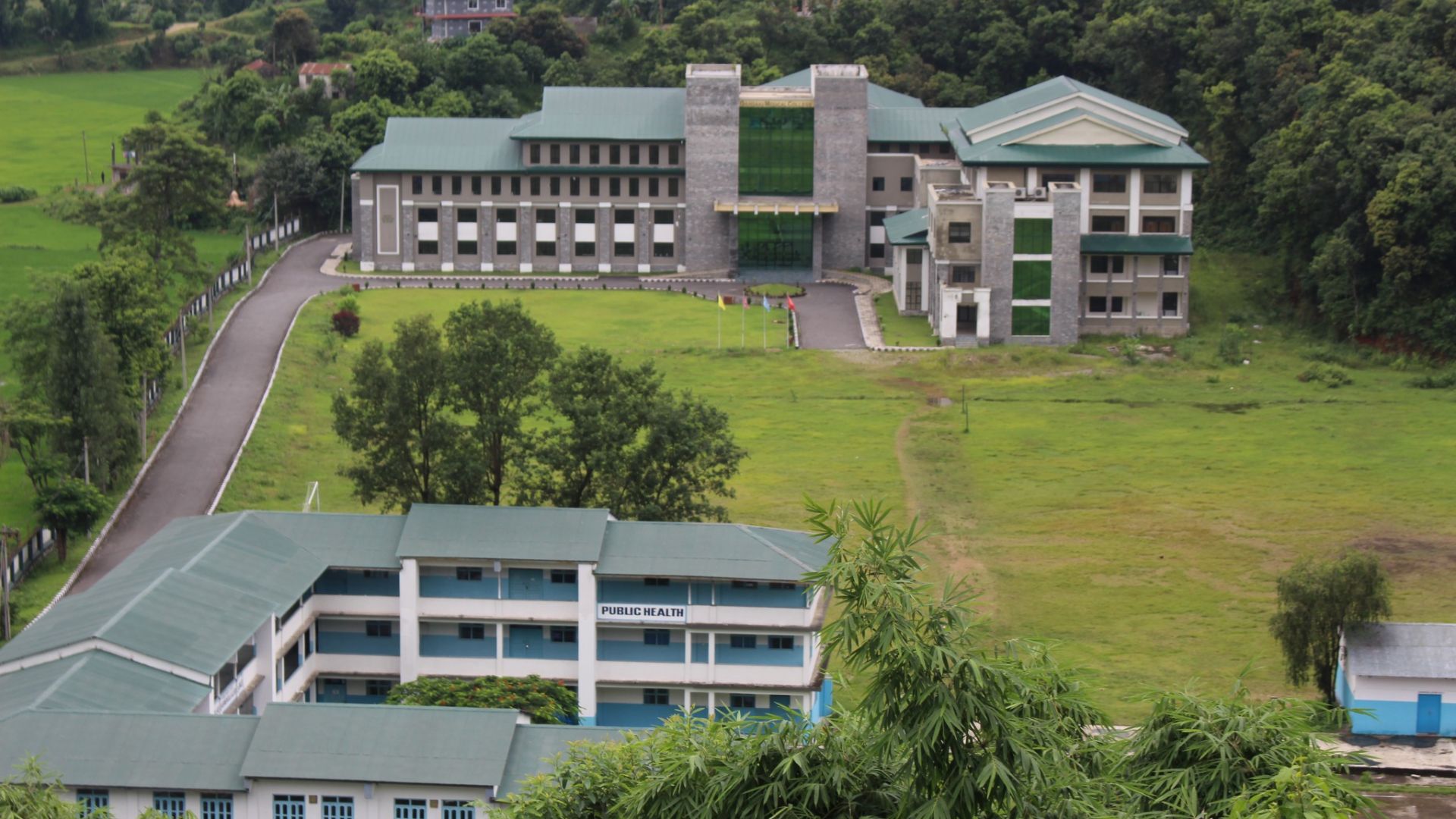
Gandaki Medical College Teaching Hospital and Research Centre functions as a combined college and hospital institution with a medical education, health care, and research mandate. The college states educational, health care, and research goals that connect classroom instruction with service delivery and medical study. Its broader institutional direction brings together teaching, patient care, and health science research, with attention to both urban and remote communities of Gandaki Province.
The college reports that it is established on about 204 ropanis of land and that its infrastructure arrangements meet the requirements of affiliated university and professional bodies. It also notes compliance with the government guideline on the establishment and operation of private and non-government health institutions. This institutional base supports academic departments, hostels, clinical facilities, and expansion of health services linked to the teaching hospital.
Its public role extends beyond classroom activity. GMC records free health camps in collaboration with institutions in Gandaki Province, awareness programs on communicable and non-communicable diseases, emergency treatment support during natural disasters, DOTS service for tuberculosis patients, safe motherhood work, blood bank service, health insurance collaboration, dialysis support, and treatment assistance for poor patients and minority groups through government recommendation channels. It also mentions a 150-bed community health center at Helu in Syangja district and continuing health science research for community and health system use.
The management structure includes a board of directors and a management committee. The college materials identify Dr. Rabeendra Prasad Shrestha as CEO/Principal, supported by academic and administrative leadership across hospital and college operations. Coordinators are listed for internship, postgraduate studies, basic sciences, MBBS clinical sciences, MBBS basic sciences, BDS, BMIT, BMLT, BPharmacy, BPH, and nursing programs, showing a program-specific administrative structure.
Academic Programs Offered
GMC’s academic profile covers medicine, dentistry, nursing, public health, pharmacy, and allied health education. The institution identifies MBBS as its focal program while also running several other bachelor’s and postgraduate programs. Seat allocation is documented under TU-IOM affiliation for multiple courses.
Undergraduate Programs
-
Bachelor of Medicine, Bachelor of Surgery (MBBS) — 120 seats
-
Bachelor of Dental Surgery (BDS) — 30 seats
-
Bachelor of Public Health (BPH) — 20 seats
-
BSc in Medical Imaging Technology (BSc MIT) — 10 seats
-
Bachelor of Pharmacy — 20 seats
-
Bachelor of Science in Nursing — 50 seats
-
A nursing science program is listed with 20 seats, and current offerings also include Bachelor of Nursing (BN)
Postgraduate Programs
The postgraduate list includes MD Biochemistry, MD Pharmacology, MS Clinical Anatomy, MD General Practice, MS in Orthopaedic and Trauma Surgery, MS General Surgery, MD Pathology, MD Psychiatry, MD Paediatrics, MD Obstetrics and Gynaecology, MD Internal Medicine, MD Anaesthesiology, MS Clinical Otorhinolaryngology and Head and Neck Surgery, MD Radio Diagnosis, MD Dermatology, and Master of Public Health. The seat list records small, specialty-based intake across these programs, with MPH carrying 5 seats.
|
Course Name |
Seats |
|
MD Biochemistry |
1 |
|
MD Pharmacology |
1 |
|
MS Clinical Anatomy |
1 |
|
MD General Practice (MDGP) |
3 |
|
MS in Orthopaedic and Trauma Surgery |
3 |
|
MS General Surgery |
3 |
|
MD Pathology |
1 |
|
MD in Psychiatry |
2 |
|
MD Paediatrics |
3 |
|
MD in Obstetrics and Gynaecology |
4 |
|
MD Internal Medicine |
4 |
|
MD Anaesthesiology |
1 |
|
Master of Public Health (MPH) |
5 |
|
MS Clinical Otorhinolaryngology and Head and Neck Surgery |
2 |
|
MD in Radio Diagnosis |
2 |
|
MD Dermatology |
2 |
Academic Structure
For MBBS, the college uses English as the language of instruction. The program is organized as a five-and-a-half-year course including one year of compulsory rotating internship. Its academic structure moves through phased study in community medicine, integrated basic medical sciences, clinical exposure, ward placement, and later clinical disciplines such as internal medicine, surgery, paediatrics, obstetrics and gynaecology, orthopedics, eye, ENT, psychiatry, dermatology, radiology, anaesthesiology, emergency medicine, and family practice. This structure shows how GMC links preclinical learning with clinical training over time.
Admission Process
Admission to medical courses at GMC follows the prevailing rules, guidelines, code of conduct, scholarship provisions, seat allocation system, fee structure, and admission procedures set by the Medical Education Commission, Nepal. The college notes that bachelor-level medical admissions are based on MECEE-BL and postgraduate admissions are based on MECEE-PG according to course level. Seats, fees, and examination guidelines are subject to revision in line with official decisions and the MEC calendar.
For MBBS, the stated eligibility requires completion of Intermediate Science, Class XII/10+2, A Level, I.Sc., or Proficiency Certificate in General Science from a recognized board or university, or an equivalent higher secondary examination. The minimum stated requirement is 60% marks in Physics, Chemistry, Biology, and English in aggregate, with separate passes in theory and practical examinations of Physics, Chemistry, and Biology. Nepalese students are admitted on merit through the joint entrance examination conducted by TU/IOM, while international candidates are also required to pass the entrance examination conducted by TU/IOM.
The admission process is not presented as a single generic route for all programs. Instead, course level, entrance examination, eligibility, and scholarship provisions are aligned with the relevant university and regulatory framework. This is important for applicants considering medicine, nursing, dentistry, public health, pharmacy, or allied health study at GMC.
Required Documents
Applicants are asked to submit academic, identity, and admission records. The published list includes:
-
SEE/SLC mark sheet
-
SEE/SLC character certificate
-
SEE/SLC examination certificate
-
SEE/SLC transfer certificate
-
SEE/SLC equivalence certificate for study completed abroad
-
10+2/PCL mark sheet
-
10+2/PCL character certificate
-
10+2/PCL provisional certificate
-
10+2/PCL migration certificate
-
10+2/PCL transfer certificate
-
10+2 board certificate
-
Common Entrance Exam card
-
Admission confirmation letter
-
Citizenship photocopy
-
Passport-size photographs
-
Original character, transfer, migration, and pass records where specified in the admission list
-
Experience letter for the nursing science stream
-
NNC registration for the nursing science stream
The admission notes for MBBS also mention originals or attested records of higher secondary academic documents, citizenship or passport, and recent passport-size photographs to be submitted through the college office for university processing.
Teaching Faculty and Learning Methodology
GMC’s learning environment is built around both academic departments and patient-care departments. The college identifies basic departments such as Anatomy, Biochemistry, Community Medicine, Forensic Medicine, Microbiology, Pathology, Pharmacology, and Physiology. It also identifies clinical departments including Anesthesiology, Dermatology, ENT, Emergency, Medicine, Neuro Surgery, Obs/Gynae, Ophthalmology, Orthopedics, Psychiatry, Radiology, and Surgery. This departmental spread supports classroom teaching, laboratory work, and hospital-based clinical exposure.
The institution places strong emphasis on practical and clinical learning. Its published materials mention project-based activities, practical approach, field visits, health camps, and hospital-centered teaching. In the MBBS structure, students move from community medicine and integrated basic sciences to clinical postings, community diagnosis work, family health exercises, clinical examinations, and junior internship. That model shows a study pattern in which classroom knowledge is expected to develop alongside observation, communication skills, and supervised patient interaction.
Clinical teaching is supported by the teaching hospital’s medical workforce. The hospital notes the presence of 100 specialist doctors and 107 non-specialist medical graduates serving the community across multiple specialties. For students, this means access to a service setting where laboratory testing, imaging, outpatient care, endoscopy, dialysis, emergency response, surgery, and intensive care are part of the daily academic environment.
The college’s academic tone also includes research and community responsibility. It records health science research activity in medical fields and links that work with health decision-making and service improvement. At the student level, the institutional pattern suggests that learning is not limited to lectures and examinations, but is tied to social service, fieldwork, and professional discipline.
Infrastructure and Learning Facilities
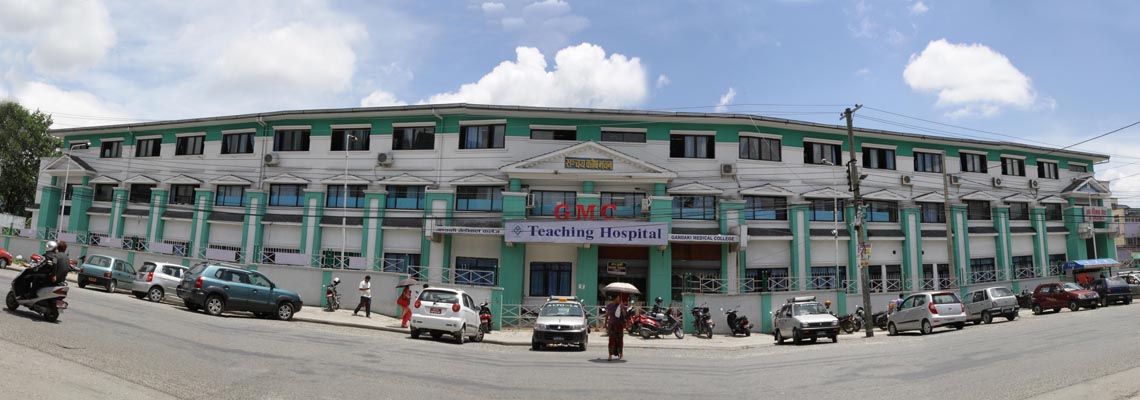
GMC combines academic and hospital infrastructure across its Pokhara operations. Its facilities and services include:
-
About 204 ropanis of land for institutional development
-
Academic buildings and hospital-linked teaching areas
-
OPD services at Sanchayakosh Bhawan, Naya Bazaar, near Prithivichowk and close to Pokhara central bus park
-
Well-equipped laboratories for microbiology, biochemistry, arterial blood gas analysis, hematology, immunology, urinalysis, pathology, and histology
-
Radiodiagnostic services including digital X-ray, ultrasound, color Doppler, CT scan, and MRI
-
Cardiology and pulmonary services including ECG, echocardiography, PFTs, TMT, ECG/EMG/EEG/Holter, and ambulatory blood pressure monitoring
-
Endoscopy and bronchoscopy services
-
Intensive care facilities including ICU, SICU, NICU, and post-operative care beds
-
Hemodialysis service with six beds
-
Seven operation theatres
-
Library and internet facilities
-
Canteen and cafeteria facilities
-
Botanical garden
-
Separate hostels for boys and girls with wardens and round-the-clock security
-
Hostel amenities such as wireless internet, conference hall, study lounge, TV hall, and indoor games
-
Sports grounds and courts for football, volleyball, cricket, badminton, and table tennis
-
Transportation support within the institutional service structure
The hospital service side of the institution matters academically because it gives students access to diagnostic, specialty, and inpatient settings within the same educational environment. For a medical college, this close connection between academic work and service delivery is one of the defining features of the institution.
Student Life and Campus Experience
Student life at GMC is shaped by its setting in Pokhara and by the daily rhythm of a medical college attached to a teaching hospital. Pokhara is connected to Kathmandu and other major cities by road and air, which supports student mobility and patient access. Within the campus environment, hostel living is organized separately for male and female students under the supervision of wardens, with security and communication facilities available throughout the day.
The campus experience appears to balance academic intensity with shared spaces for study, movement, and recreation. Hostels include internet access, a cafeteria, conference hall, study lounge, TV hall, and indoor games, while the wider campus supports outdoor sports and student interaction. The Pokhara setting adds a distinct local environment, but the academic experience remains centered on hospital-based learning, scheduled classes, practical sessions, and clinical responsibilities.
Extracurricular Activities (ECA)
-
Football, volleyball, cricket, badminton, and table tennis are part of the sports environment
-
Indoor games listed in the hostels include table tennis, carrom board, chess, and gym use
-
Field visits and health camps form part of the student activity pattern
-
Students have participated in inter-medical college football tournaments
-
Students have also taken part in literary competition activities
Scholarships and Financial Support
-
The college provides scholarships to 10% of the total annual student intake
-
Scholarship recipients are nominated by the Nepal Government on the basis of merit in the entrance examination
-
A Students Welfare Fund is mentioned for poor patients
-
The institution also records free treatment support for poor patients and minority groups through recommendation from local or government authorities
-
Health insurance and safe motherhood collaborations show a wider support role linked to the hospital system
Achievements and Institutional Milestones
-
More than 600 students are studying in the college, with about 40 in postgraduate specialties
-
The college records health science research across medical fields
-
A 150-bed community health center is noted at Helu in Syangja district
-
DOTS service, blood bank service, dialysis collaboration, and other public health support activities are part of the institutional record
-
GMC students secured first position in boys’ football in an inter-medical college tournament held at UCMS
-
The girls’ football team secured first position in an inter-medical college tournament held at BPKIHS
-
Students also secured third position in a literary competition held at BPKIHS
Why Choose Gandaki Medical College?
Students comparing medical and allied health colleges may note the following features at GMC:
-
Direct linkage between academic programs and a functioning teaching hospital
-
A broad mix of medical, dental, nursing, pharmacy, public health, and allied health programs
-
Undergraduate and postgraduate study options within the same institution
-
Practical learning through laboratories, ward exposure, field activities, and health camps
-
Scholarship access through government merit nomination
-
Separate hostels, study spaces, internet access, and sports facilities
-
Community-oriented service activities in health camps, awareness work, DOTS, dialysis, and support programs
-
Pokhara location with road and air connectivity
-
Program coordination structure across major academic streams
Message from the Principal
The principal’s message presents the college as a place intended to produce qualified medical manpower while also supporting health service delivery. It highlights academic commitment, social responsibility, and the need to connect knowledge, skill, and compassion in medical training. The message also places value on an environment where students feel secure, supported, and academically challenged.
Medical education is framed as a professional responsibility that includes preventive, promotive, curative, and rehabilitative care. The message links teaching with service, discipline, and human responsibility rather than viewing academic success in isolation. The signatory identified in the message is Prof. Dr. Rabeendra Prasad Shrestha, Principal.
Conclusion
Gandaki Medical College Teaching Hospital and Research Centre presents a combined academic and clinical environment for students pursuing medicine and allied health education in Pokhara. Its profile brings together university affiliation, hospital-based learning, specialist and diagnostic services, hostel life, community engagement, scholarship provision, and a multi-program academic structure. For students looking at institutions that connect classroom teaching with hospital practice, GMC stands out through its integrated service setting, broad program range, and continued involvement in public health and community-oriented work.
Contact Details
Contact Gandaki Medical College (GMC)'s administrative office for detailed information on the course, admissions, location, fees, scholarships, facilities, counseling, or eligibility.
Gandaki Medical College (GMC)
Email Address: office@gmc.edu.np
Head Office, Pokhara, Nepal
-
+977-61-588595, 61-552253, 61-552254, 61-584657
-
principal@gmc.edu.np
-
Sanchayakosh Bhawan Nayabazar, Prithivichowk
Corporate Office Kathmandu, Nepal
-
+977-1-5911729, +977-1-5911769
-
ktm@gmc.edu.np
-
Near to Custom Office, Opposite of Dasharath Stadium, Tripureshwor (K.D. Tower)
College
-
+977-61-561718
-
principal@gmc.edu.np
-
Lekhnath, Kaski, Nepal Ritthepani-2, Kaski, Lekhnath
FAQ
Where is Gandaki Medical College located?
Gandaki Medical College is located in Lekhnath-2, Ritthepani, Kaski, Nepal, and its head office functions are noted at Sanchayakosh Bhawan, Prithivichowk, Pokhara.
Which university is Gandaki Medical College affiliated with?
The college is affiliated with Tribhuvan University, and its seat allocation is recorded under TU-IOM affiliation.
What courses are available at GMC?
GMC offers MBBS, BDS, BPH, BSc MLT, BSc MIT, Bachelor of Pharmacy, nursing-related programs, and postgraduate medical specialties including MPH and several MD/MS streams.
How does admission work for medical programs at GMC?
Medical admissions follow the framework of the Medical Education Commission. Bachelor-level admissions are based on MECEE-BL, postgraduate admissions are based on MECEE-PG, and MBBS admissions also refer to TU/IOM entrance procedures and merit.
What is the MBBS eligibility requirement at Gandaki Medical College?
For MBBS, the stated eligibility includes Intermediate Science, Class XII/10+2, A Level, I.Sc., or an equivalent higher secondary science qualification with at least 60% aggregate marks in Physics, Chemistry, Biology, and English, along with separate passes in theory and practical examinations of Physics, Chemistry, and Biology.
Does GMC provide hostel facilities?
Yes. The college provides separate hostel facilities for boys and girls under the supervision of wardens, with round-the-clock security and facilities such as wireless internet, cafeteria access, conference hall, study lounge, TV hall, and indoor games.
Are scholarships available at Gandaki Medical College?
Yes. The college states that scholarships are provided to 10% of the annual student intake, and the Nepal Government nominates scholarship students on the basis of entrance examination merit.