



Master in Development Studies (MDEVS) is a two-year, four-semester graduate program offered through the Department of Development Studies at Kathmandu University School of Arts (KUSOA), Hattiban, Lalitpur. KUSOA is a constituent academic unit of Kathmandu University (KU).
The program carries 48 credit hours and combines development theory with research, economics, public policy, project management, communication, environment, population, globalization, and other development-related subjects. Students also complete either a nine-credit dissertation or a fourth-semester route involving community internship and independent study.
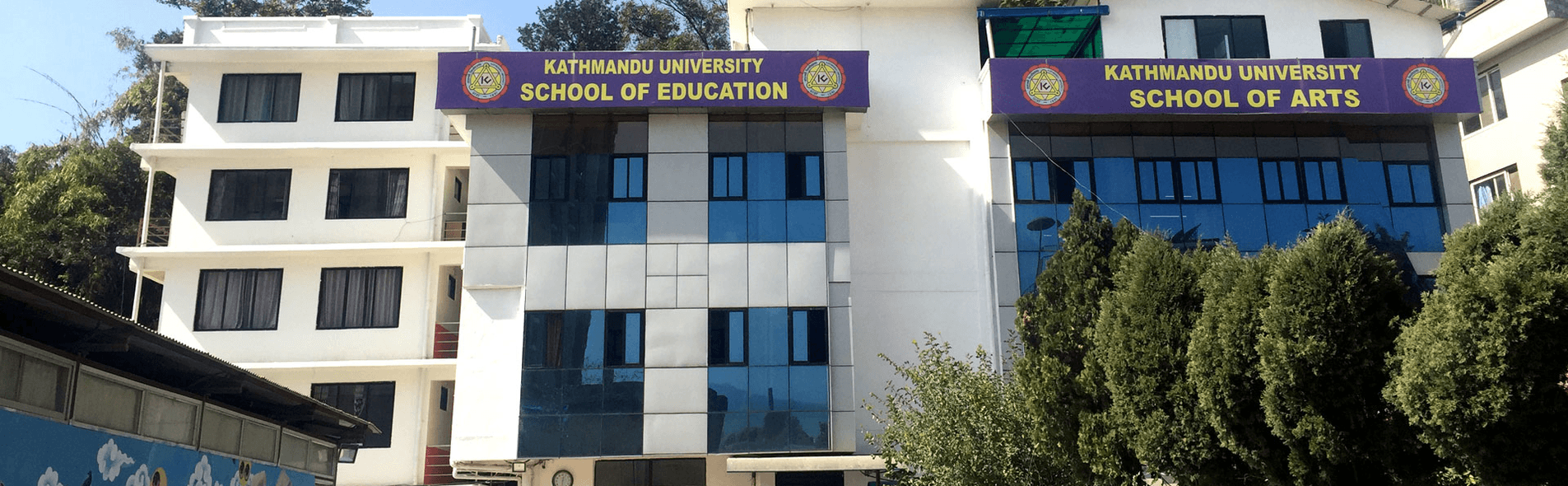
| Particular | Details |
|---|---|
| Course | Master in Development Studies (MDEVS) |
| Institution | Kathmandu University School of Arts |
| Department | Department of Development Studies |
| University | Kathmandu University |
| Location: | Hattiban, Lalitpur, Nepal |
| Duration: | 2 years |
| Academic structure | 4 semesters |
| Total credits | 48 credit hours |
| Seats: | 25 |
| Final-stage options | Dissertation or Community Internship and Independent Study |
| Degree administration | Kathmandu University rules and regulations |
MDEVS examines development through social, economic, political, environmental, institutional, and research perspectives. The program is intended to build an understanding of contemporary national and global development issues while giving students methods for analyzing practical development concerns.
The curriculum covers areas ranging from human development and population to economics, public policy, project management, gender and inclusion, environment, climate change, entrepreneurship, development communication, and research methodology.
Study is not confined to lectures. Case studies, field surveys, seminars, community internships, presentations, and discussion are part of the teaching structure. Students are expected to participate actively, with faculty members taking a guiding role during the learning process.
The program is structured to develop students' understanding of current development debates and the methods used to examine development questions.
Its academic goals include helping students develop:
Knowledge of contemporary national and global development issues.
Understanding of major debates within development studies.
Basic technical ability for research and analysis.
Capacity to discuss development issues with professionals and academics.
A foundation for further academic study in related fields.
The course therefore combines conceptual study with practical analysis rather than treating development only as a policy or administrative subject.
The MDEVS curriculum includes a broad set of development-related subjects.
Key courses include:
DEVS 501 Development Concepts and Practices
DEVS 502 Human Development Paradigms
DEVS 503 Gender, Inclusion and Ethnicity
DEVS 504 Population and Development
DEVS 509 Economic Analysis
DEVS 511 Introduction to Education for Development
DEVS 512 Statistics
DEVS 513 Project Management, Monitoring and Evaluation
DEVS 514 Research Methodology
DEVS 515 Macro Economics
DEVS 516 Micro Economics
DEVS 517 Development Finance
DEVS 519 Development Communication
DEVS 521 Public Policy
DEVS 522 Micro Development Dynamics
DEVS 523 Globalization and WTO
DEVS 524 Entrepreneurship and Development
DEVS 525 Evaluation Methods
DEVS 527 Globalization and Livelihood Options of People Living in Poverty
DEVS 531 Nepal's Development Plans and Policies
DEVS 532 Nepal's Economic Diplomacy with China and India
DEVS 533 Environment, Health and Development
DEVS 535 Climate Change and Development
DEVS 536 Ecosystem Analysis
DEVS 539 Management of Development Induced Displacement and its Impacts
DEVS 549 Rural Development & Alternative Energy
DEVS 550 State Politics & Development
This subject mix gives the program a multidisciplinary character. Economics, policy, sociology, environmental concerns, project work, research, and development practice appear within the same academic framework.
Duration: The Master in Development Studies takes two years and is divided into four semesters.
Students must complete 48 credit hours to graduate. A three-credit course requires 48 contact hours.
The fourth semester gives students two academic routes.
Students choosing the dissertation route complete DEVS 540 Dissertation, carrying nine credits.
A supervisor is assigned after the student successfully defends the dissertation proposal. The completed dissertation must be submitted to the Department by the end of the two-year program.
The alternative route consists of:
DEVS 541 Community Internship — 3 credits
DEVS 534 Independent Study — 3 credits
The Community Internship is a supervised academic placement in a selected development setting. Students undertake an approved project within a suitable community and take part in workshops where they discuss their experience and reporting with faculty members and fellow students. An internship coordinator is assigned for this component.
Students must complete the full graduation requirements within five academic years from the date of enrolment.
Eligibility: Applicants may enter with a minimum three-year or four-year bachelor's degree, or a master's degree.
The academic threshold is:
Minimum CGPA of 2.0 out of 4.0 or equivalent, or
Minimum 45 percent marks.
Applicants must also secure an acceptable ranking in the entrance examination. The entrance test assesses required competencies, including language proficiency and analytical ability.
Admission involves both a written examination and an interview.
The process includes:
Submission of the required application.
Entrance examination assessing language proficiency and analytical ability.
Selection of candidates who pass the written examination for interview.
Final selection after the interview.
Applications are made through the official application process of the School of Arts, Kathmandu University.
Admission, curriculum, examinations, results, academic progression, and degree award follow Kathmandu University rules and regulations.
The program combines classroom learning with research and field-oriented academic work.
Teaching methods include:
Classroom lectures
Case-study analysis
Field surveys
Seminars
Community internships
Results discussions
Presentations
Research-related work
These methods allow students to work with development issues from both theoretical and practical perspectives.
The Community Internship is particularly focused on applying development knowledge and skills within a supervised placement. Students undertake an approved project and discuss their experience through organized academic workshops.
Several courses show how widely the program approaches development.
Development Concepts and Practices examines major issues facing developed and developing countries. Nepal's Development Plans and Policies considers changes in development approaches, economic performance, sectoral development, regional and rural development, aid, trade, and planning.
Environment, Health and Development examines connections among health, environmental conditions, sustainable development, interventions, and research questions. Entrepreneurship and Development deals with new venture creation and business planning, while Evaluation Methods applies social-science research methods to the evaluation of projects and their results.
This combination allows students to examine development at policy, community, economic, environmental, organizational, and research levels.
Through coursework, field surveys, presentations, research, and either dissertation or internship-based study, students may develop abilities related to:
Development research and analysis
Project planning and evaluation
Research methodology
Quantitative study through statistics
Policy analysis
Development communication
Academic writing and presentation
Field-based investigation
Community-level project work
Analysis of economic and environmental development issues
The particular strengths developed by each student depend on course choices, research work, the fourth-semester route, and individual academic performance.
The program identifies development specialist and development analyst as career directions, including work in development agencies within government and other sectors.
Graduates may consider areas connected with:
Development agencies
Development research
Project planning and management
Monitoring and evaluation
Public policy
Community development
Development communication
Environment and development
Research and analysis
The graduate program in Development Studies at Kathmandu University also includes PhD-level study, providing an academic route for students interested in continuing in the field.
Career outcomes depend on individual skills, academic performance, research experience, professional experience, and available opportunities.
The program may suit graduates interested in understanding development through several connected perspectives rather than through one narrow discipline.
It may be particularly relevant to students interested in development policy, research, community issues, economics, environment, public policy, project management, population, development communication, and related fields.
Applicants should also be comfortable with reading, academic writing, research methods, presentations, field-based study, and independent work. The final stage requires either a substantial dissertation or a combination of community internship and independent study.
The Master in Development Studies is a two-year program divided into four semesters.
Students must complete 48 credit hours to successfully graduate from the program.
Applicants must have a minimum three-year or four-year bachelor's degree, or a master's degree, with at least a 2.0 CGPA out of 4.0 or an equivalent 45 percent.
Yes. Applicants must take an entrance examination that assesses competencies including language proficiency and analytical ability. Candidates who pass the written examination are selected for interview.
KUSOA identifies 25 seats for Master in Development Studies.
Yes. Students can choose a nine-credit dissertation as their fourth-semester academic route.
Yes. Students may instead complete a three-credit Community Internship and a three-credit Independent Study.
Subjects cover development concepts, human development, gender and inclusion, population, economics, statistics, project management, research methodology, development finance, communication, public policy, entrepreneurship, globalization, environment, climate change, and Nepal's development plans and policies.
Yes. Field surveys form part of the teaching approach, and students choosing the internship route complete a structured supervised Community Internship.
The program identifies development specialist and development analyst roles and prepares students for work connected with development agencies, research, projects, policy, community development, and related areas. Career outcomes depend on individual preparation and available opportunities.






