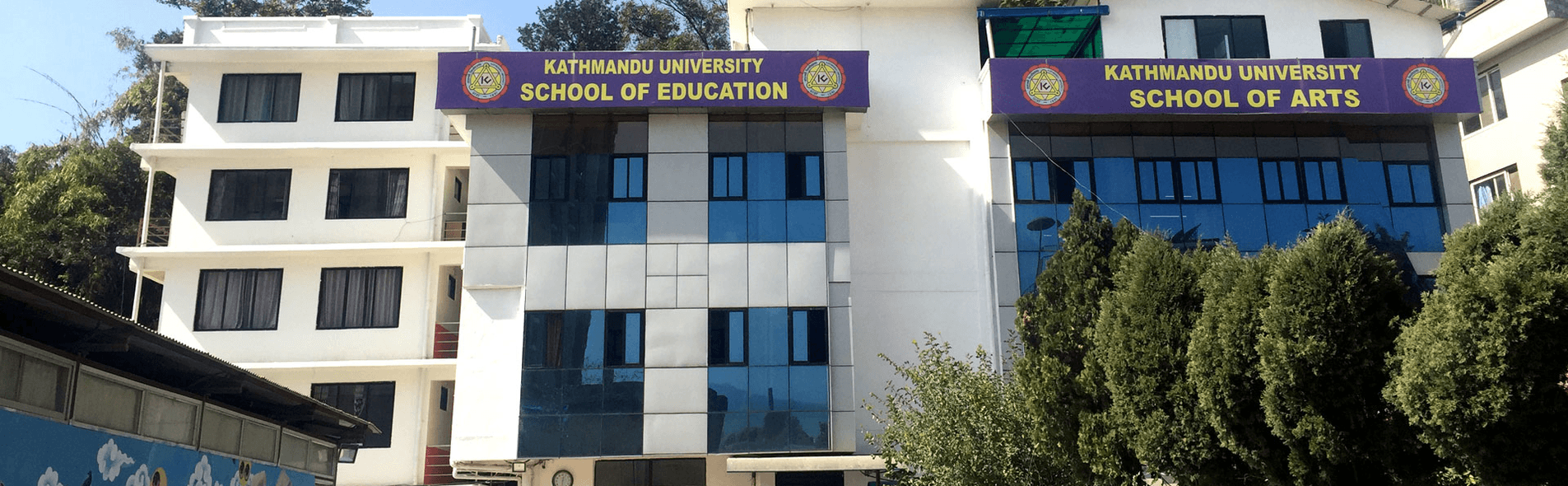
Master in Urban Studies (MUS) at Kathmandu University School of Arts (KUSOA) is a two-year interdisciplinary graduate program concerned with cities, urbanization, planning, governance, infrastructure, society, and sustainability.
The course combines perspectives from engineering, natural sciences, and social sciences rather than approaching urban development through a single discipline. Students work with research methods, planning studios, GIS and visual tools, urban finance, resilient settlements, and specialized urban subjects.
The program carries 54 credits and includes elective study followed by internship and research work or a dissertation route. Academic requirements, examinations, results, and the degree award operate within the rules and regulations of Kathmandu University (KU).
| Particular | Details |
|---|---|
| Course | Master in Urban Studies (MUS) |
| Institution | Kathmandu University School of Arts (KUSOA) |
| University | Kathmandu University |
| Location | Hattiban, Lalitpur, Nepal |
| Level | Master's |
| Duration: | 2 years |
| Total credits | 54 |
| Seats: | 24 |
| Academic approach | Interdisciplinary |
| Class time | 7:00 AM to 10:00 AM |
| Teaching mode | Predominantly face-to-face; online mode used as appropriate |
KUSOA identifies 24 seats for the Master in Urban Studies. The course-specific academic structure requires successful completion of 54 credits.
MUS examines cities as physical, social, economic, demographic, environmental, and institutional systems. Its interdisciplinary structure brings urban planning into conversation with social sciences, governance, infrastructure, research, resilience, and natural-science concerns.
The academic focus includes the historical development of cities as well as contemporary issues affecting urban areas. Students encounter subjects related to urban institutions, demographic change, planning methods, research, GIS, urban finance, resilient settlements, poverty, transportation, health, waste management, land use, public space, and heritage.
The program also addresses urban development in relation to sustainability, climate change, disaster risk, service delivery, infrastructure, and governance. Research and planning studios give students opportunities to work analytically with urban questions rather than studying them only at a conceptual level.
The course is structured around the study of sustainable urban development and the different forces shaping cities.
Its academic aims include:
Connecting national urban development concerns with wider development priorities and Sustainable Development Goals.
Studying urban poverty and access to infrastructure.
Examining urban resilience in relation to climate change and disaster risk.
Developing understanding of integrated land-use planning.
Studying infrastructure and service-delivery questions.
Building theoretical and practical understanding of urban transformation.
Providing opportunities for learning through research and practice.
Developing an interdisciplinary understanding of cities and urban regions.
Students also work toward stronger research, critical-thinking, problem-solving, and cross-disciplinary abilities through coursework, planning exercises, fieldwork, and independent academic work.
The first three semesters carry 15 credits each. The concluding semester accounts for the remaining credits needed to complete the 54-credit program.
| Stage | Academic focus | Credits |
|---|---|---|
| First Year, Semester I | Urban foundations, research, society, governance and demography | 15 |
| First Year, Semester II | Research, planning studio, GIS, resilience and urban finance | 15 |
| Second Year, Semester I | Five elective courses | 15 |
| Second Year, Semester II | Internship/independent research or dissertation route | 9 |
Students begin with five three-credit courses:
USPH 501 Urbanization and Planning History
USRM 511 Analytical Research Methods
USCS 501 Urban Culture and Social Systems
USGS 501 Urban Institutions and Governance System
USUD 501 Urban Demography I
This semester establishes an academic base for understanding how cities develop, how urban populations change, how institutions and governance affect cities, and how urban questions can be investigated through research.
The second semester introduces a stronger planning and applied component:
USRM 522 Analytical Research Methods II
USPS 511 Planning Studio I
USGI 521 Urban GIS and Visual Tools
USRC 521 Resilient Cities and Settlements
USUF 521 Urban Finance
Research methodology continues into a second course, while Planning Studio I introduces studio-based urban study. GIS and visual tools add a spatial component, and the semester also covers resilience and the financial dimensions of urban development.
In the third semester, students complete five courses from the elective group offered by the program.
Elective subjects include:
USUP 601 Urban Poverty
USHS 631 Urban Health System
USTS 631 Urban Transport System
USWM 611 Urban Waste Management and Sanitation
USWJ 631 Ethics, Welfare and Justice
USHM 621 Landscape & Heritage Management
USLP 601 Land Use Planning
USPS 631 Private Sector and Urban Development
USSR 631 Public Space and Recreation
USPS 621 Planning Studio II
The elective structure allows the course to move into specific urban concerns after students complete the common first-year foundation. Areas range from transportation, health, and sanitation to land use, heritage, public space, poverty, and urban development.
Other optional subjects identified within the curriculum include Urban Economics, Urban Education, Migration and Urbanization, Rural Urban Linkages, Politics of Urbanization, Climate Change and Development, and Urban Housing.
The final stage of MUS is designed around independent and applied academic work.
The curriculum identifies Urban Internship, Independent Research, and Dissertation within the concluding semester. The semester carries nine credits, with the academic route organized around internship and independent research or a dissertation option.
This component follows two semesters of analytical research methods and the planning-studio work included earlier in the program. Project work is also an integral component of many courses across the degree.
The structure gives research a continuing place throughout MUS rather than limiting research to the end of the course.
Eligibility: Applicants must have a bachelor's degree in any discipline with a minimum CGPA of 2.5 or 50 percent.
KUSOA's admission guidelines similarly specify completion of at least a three-year bachelor's degree with a cumulative GPA of 2.5 out of 4.0 or an equivalent 50 percent in the latest degree for Master in Urban Studies.
The acceptance of bachelor's degrees from any discipline reflects the interdisciplinary character of the program. Students may therefore enter urban studies from different academic backgrounds, subject to meeting the stated admission criteria.
Applicants must meet the academic eligibility requirement and successfully complete the selection process conducted for the program.
Admission includes:
Meeting the bachelor's-level academic requirement.
Taking a written entrance test.
Completing an interview conducted by the Program/Department.
The broader KUSOA admission guideline states that the entrance examination for Master in Urban Studies assesses language proficiency and analytical abilities.
Admission, entrance, curriculum, examinations, results, progression, and the final degree award remain governed by Kathmandu University rules and regulations.
Teaching is predominantly face-to-face, with online study used when appropriate.
The academic experience includes more than conventional lectures. Evaluation and coursework show that students work through reading, writing, research, presentation, field engagement, and project activity.
Learning components include:
Required reading and class interaction
Long and short written assignments
Research-based presentations
Fieldwork
Internships
Quizzes
Examinations
Project work
Planning studio activities
Independent research
The inclusion of GIS, planning studios, fieldwork, internship, and research assignments reflects the combination of conceptual and applied study within the course.
Evaluation uses several methods according to the nature of the course. Students may be assessed through reading-based classroom interaction, written assignments, research presentations, fieldwork, internships, quizzes, and examinations.
Project work forms an integral part of many subjects.
To graduate, students must successfully complete 54 credits. The degree is awarded through Kathmandu University after fulfillment of the academic requirements prescribed for the program.
The curriculum supports development of abilities directly connected with the subjects students study. These include:
Urban research and analysis
Understanding urban governance and institutions
Spatial study through GIS and visual tools
Planning-related analysis
Research writing and presentation
Examination of demographic and social aspects of cities
Analysis of urban finance and infrastructure
Understanding resilience and settlement issues
Field-based investigation
Interdisciplinary problem analysis
Independent research
The particular academic strengths a student develops will also depend on the electives, project work, and final research route completed during the program.
The program identifies a range of career areas connected with urban development, policy, planning, research, community work, and development practice.
Graduates may consider areas such as:
Urban development work
Urban governance and policy
Program and project management
City and urban planning
Community development
International development work
Public policy analysis
Research
Urban disaster analysis
Cultural consultancy
Emergency response planning
International aid work
Career outcomes depend on a graduate's academic preparation, skills, experience, chosen area of specialization, and available employment opportunities.
MUS may be relevant to graduates interested in studying cities through more than one disciplinary lens.
The curriculum is particularly aligned with interests in urbanization, planning, governance, research, sustainability, infrastructure, demographics, resilience, land use, public policy, development, and social questions affecting cities.
Applicants should also be prepared for research methods, written assignments, presentations, planning-studio work, field engagement, projects, and independent academic study. The morning class schedule of 7:00 AM to 10:00 AM is another practical part of the program structure.
The Master in Urban Studies is a two-year graduate program at Kathmandu University School of Arts.
Students must successfully complete 54 credits to graduate from the program.
Applicants must have a bachelor's degree in any discipline with a minimum CGPA of 2.5 or 50 percent.
Yes. Applicants must successfully complete a written test and interview. The entrance examination assesses language proficiency and analytical abilities.
The program has 24 seats.
The first year includes Urbanization and Planning History, Analytical Research Methods I and II, Urban Culture and Social Systems, Urban Institutions and Governance System, Urban Demography I, Planning Studio I, Urban GIS and Visual Tools, Resilient Cities and Settlements, and Urban Finance.
Yes. The third semester consists of five elective courses. Options include Urban Poverty, Urban Health System, Urban Transport System, Urban Waste Management and Sanitation, Land Use Planning, Landscape & Heritage Management, Public Space and Recreation, Planning Studio II, and other urban subjects.
Yes. Research runs through the curriculum, and the concluding stage includes internship and independent research or a dissertation route. Project work is also part of many courses.
The stated class time is 7:00 AM to 10:00 AM.
The program identifies urban development, urban governance and policy, planning, project management, community development, public policy, research, urban disaster analysis, cultural consultancy, emergency response planning, and international development among its career areas.