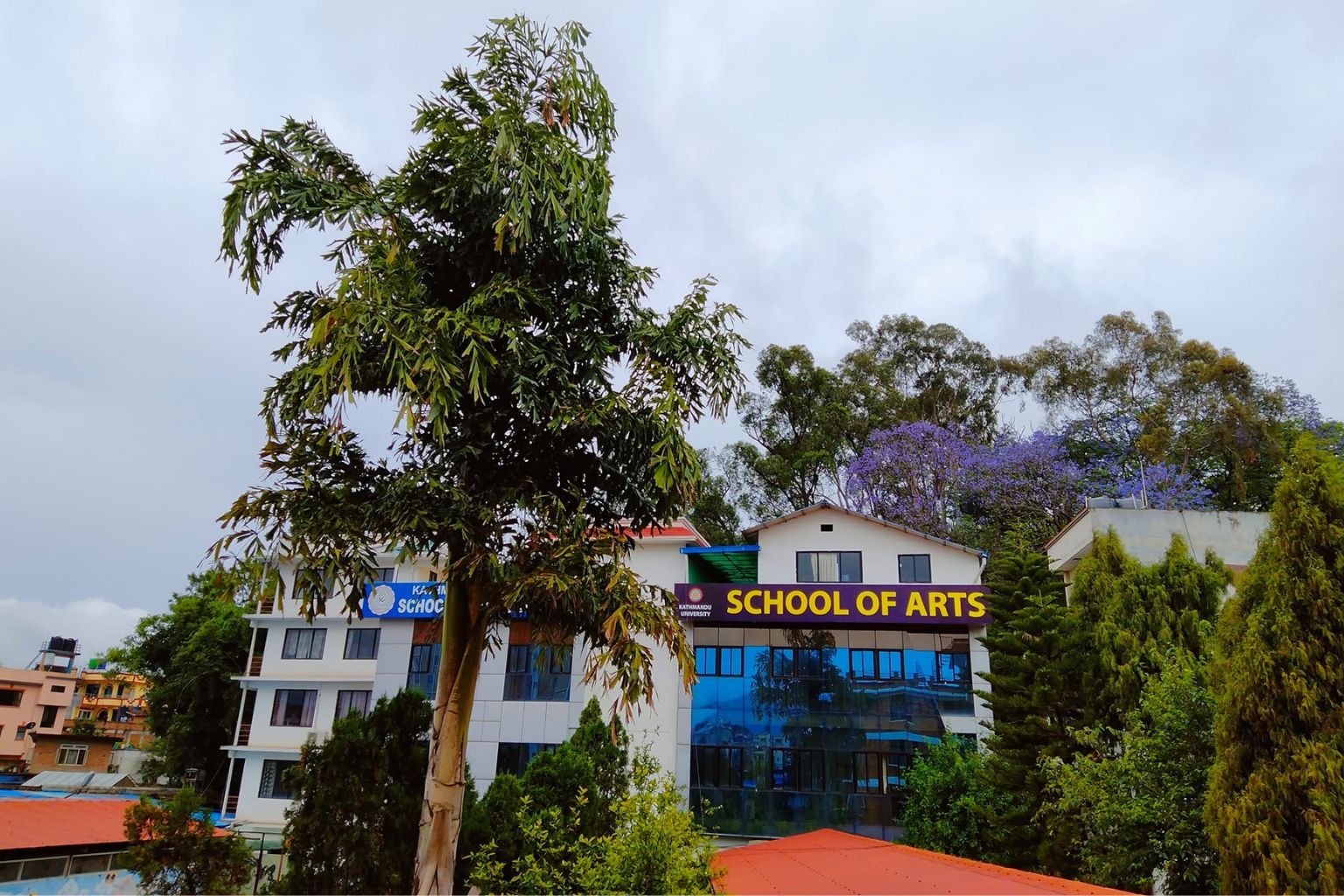
Bachelor of Craft and Design (BCDes) is a four-year, eight-semester undergraduate program offered through the Department of Art and Design at Kathmandu University School of Arts (KUSOA), Hattiban, Lalitpur.
The 135-credit degree is built around experiential learning in craft and design, combining studio practice, material studies, design, technology, historical and philosophical study, electives, apprenticeship, internship, independent projects, and professional development. KUSOA is a constituent academic unit of Kathmandu University (KU).
| Particular | Details |
|---|---|
| Course | Bachelor of Craft and Design (BCDes) |
| Level | Bachelor's |
| Institution | Kathmandu University School of Arts |
| Department | Department of Art and Design |
| University | Kathmandu University |
| Location: | Hattiban, Lalitpur, Nepal |
| Duration: | 4 years |
| Academic structure | 8 semesters |
| Total credits | 135 |
| Obligatory courses | 120 credits |
| Electives | 15 credits through 5 electives |
| Seats: | 20 |
| Eligibility: | Higher Secondary (+2) or equivalent in any discipline |
| Minimum requirement | 40% aggregate |
| Instruction | English and Nepali |
| Practical components | Studios, craft workshops, apprenticeship, projects and internship |
KUSOA places Bachelor of Craft and Design under its Department of Art and Design together with Bachelor of Fine Arts. The finalized institutional program context identifies 20 seats for BCDes.
BCDes is structured for craft practitioners, aspiring designers, and students interested in combining hands-on making with design thinking and academic study.
The program connects craft and design with art, technology, business, and culture. It also addresses relationships between tradition and changing design practices, form and function, social and ethical questions in craft and design processes, sustainability, and climate-related concerns.
A central theme is the connection between indigenous knowledge and intergenerational craft skills on one side and design, engineering, and technological developments on the other. This gives traditional craft practice an academic setting while exposing students to contemporary design tools and production methods.
The program is therefore broader than training in one material or one craft. Students encounter multiple materials, studio environments, technical processes, independent practice, professional development, and elective study across the four-year degree.
Duration: Four years
Academic Structure: Eight semesters
Total Credits: 135
The degree is divided into 120 credits of obligatory coursework and 15 credits earned through five electives selected by the student. Students may also take additional electives according to their needs and capacity.
| Credit Component | Credits |
|---|---|
| Obligatory courses | 120 |
| Five electives | 15 |
| Total for degree | 135 |
The elective component allows students to develop more specialized or interdisciplinary interests alongside the compulsory craft and design curriculum.
The curriculum brings together practical, technical, historical, and professional areas rather than organizing the degree around classroom theory alone.
Academic and practical areas include:
Art and engineering studios
Design studios
Material sciences
Independent craft practices
History of craft and design
Current craft and design techniques
Professional-development subjects
Elective study
Research and writing
Independent projects
Apprenticeship and on-the-job learning
Students may also continue or develop their existing craft practices within supervised learning arrangements.
One of the program's defining characteristics is exposure to different materials and production processes.
Students work with areas that include metal, wood, jewellery, stone, ceramics, natural fibres, animal products, textiles, and digital fabrication.
Working across different materials gives students opportunities to compare properties, processes, tools, and design approaches rather than remaining confined to a single craft medium.
The curriculum connects this material experience with disciplines such as furniture design, fashion design, product design, and interior design. These are areas in which the materials and processes taught through the degree may be applied.
Technology is incorporated into the course alongside traditional and material-based craft practices.
Students are introduced to tools and technologies such as:
3D modelling software
Digital fabrication equipment
Computer-controlled machinery
The purpose is to connect manual and inherited craft knowledge with contemporary production and design processes.
The program also addresses how designers, engineers, and craft practitioners can work across shared areas. This relationship between making, design, and technology is reflected in the inclusion of both art and engineering studios within the curriculum.
BCDes is organized as an experiential-learning program.
Teaching involves contributions from master artisans, designers, engineers, artists, cultural specialists, craft leaders, social scientists, and other practitioners connected with the field. Individual areas of study are managed through relevant subject expertise.
Learning methods include studio-based supervised sessions, demonstrations, presentations, practical workshop sessions, interactive theory tutorials, project assignments, electives, research, writing, and continuous studio practice.
Independent practice can take place through intensive studio work at selected craft workshops, expert mentorship, or on-the-job training.
This structure requires active participation. Students work through practical sessions and projects rather than relying only on lectures and written examinations.
Apprenticeship and internship are included within the learning approach.
Students may work in selected craft workshops and participate in on-the-job training. Regular visits to craft experts, organizations, and institutions also form part of the academic approach.
The program further includes research projects and community-based projects, allowing craft and design study to take place in settings beyond the regular studio.
Professional preparation also includes portfolio development, preparation of promotional materials, and interaction with people and organizations working in related sectors.
These activities connect academic work with the practical processes through which craft and design work is developed, presented, and communicated.
Students complete five electives carrying a combined 15 credits.
The elective structure allows students to build a more specialized or interdisciplinary direction within the broader degree. Students can also enroll in additional electives according to their needs and capacity.
Electives sit alongside the 120 compulsory credits and do not replace the core craft and design requirements.
Eligibility: Applicants must have completed Higher Secondary (+2) or an equivalent qualification in any discipline with a minimum 40% aggregate.
The eligibility rule does not restrict applicants to a particular +2 stream.
Admission and entrance procedures are administered according to Kathmandu University rules and the requirements applicable to Bachelor of Craft and Design.
Lectures and written academic work are conducted in English and Nepali.
Examinations may also be conducted in English as well as Nepali. Nepali can be used informally during practical sessions and when students work with outside instructors.
This bilingual arrangement is particularly relevant to a program that involves classroom study together with craft workshops, practitioners, studio instruction, and field-based interaction.
The program is designed to give traditionally trained craft practitioners a route into academic study while also serving students entering craft and design through formal undergraduate education.
Its aims include developing technical ability, creativity, originality, craft practice, design knowledge, and understanding of production technology. The degree also connects existing craft traditions with developments in design and technology and considers sustainability within the changing craft sector.
Another aim is to prepare students to work across craft and design alongside areas such as manufacturing and technology.
Through studio practice, workshops, material exploration, projects, electives, apprenticeship, and technology-oriented coursework, students may develop abilities related to:
Craft production and material handling
Design development
Studio practice
Working across different craft materials
3D modelling and digital fabrication
Independent project development
Research and writing
Portfolio preparation
Interdisciplinary collaboration
Presentation of craft and design work
The particular abilities developed by each student depend on elective choices, material interests, studio work, projects, apprenticeship, and individual practice.
The curriculum connects directly with several craft and design disciplines, including furniture design, fashion design, product design, and interior design. It also prepares students to work with traditional craft practices, contemporary production methods, manufacturing-related contexts, and technology used in design and fabrication.
Graduates may consider continuing independent craft practice or pursuing design-related work that matches their material experience, portfolio, technical abilities, and additional specialization.
Professional direction depends on the graduate's skills, chosen electives, practical experience, portfolio, further training, and available opportunities.
Bachelor of Craft and Design is offered through the Department of Art and Design at Kathmandu University School of Arts.
Department Contact: Mr. Sagar Manandhar
Phone: 9841478945
Email: info@kuart.edu.np
Admission, entrance, curriculum, examinations, results, academic progression, and degree award operate according to Kathmandu University rules and regulations.
BCDes is a four-year undergraduate degree divided into eight semesters.
Students need 135 credits for the degree. This includes 120 credits of obligatory courses and 15 credits from five electives.
KUSOA identifies 20 seats for the program.
Applicants need Higher Secondary (+2) or an equivalent qualification in any discipline with a minimum 40% aggregate.
The program includes work with metal, wood, jewellery, stone, ceramics, natural fibres, animal products, textiles, and digital fabrication.
Yes. Students are introduced to 3D modelling software, digital fabrication equipment, and computer-controlled machinery.
Yes. Students complete five electives worth a total of 15 credits and may take additional electives according to their needs and capacity.
Yes. Apprenticeship, internship, craft-workshop learning, and on-the-job training are included within the experiential learning structure.
Lectures and written work use English and Nepali. Examinations may also be conducted in English and Nepali.
The curriculum connects craft and material study with areas such as furniture design, fashion design, product design, and interior design.