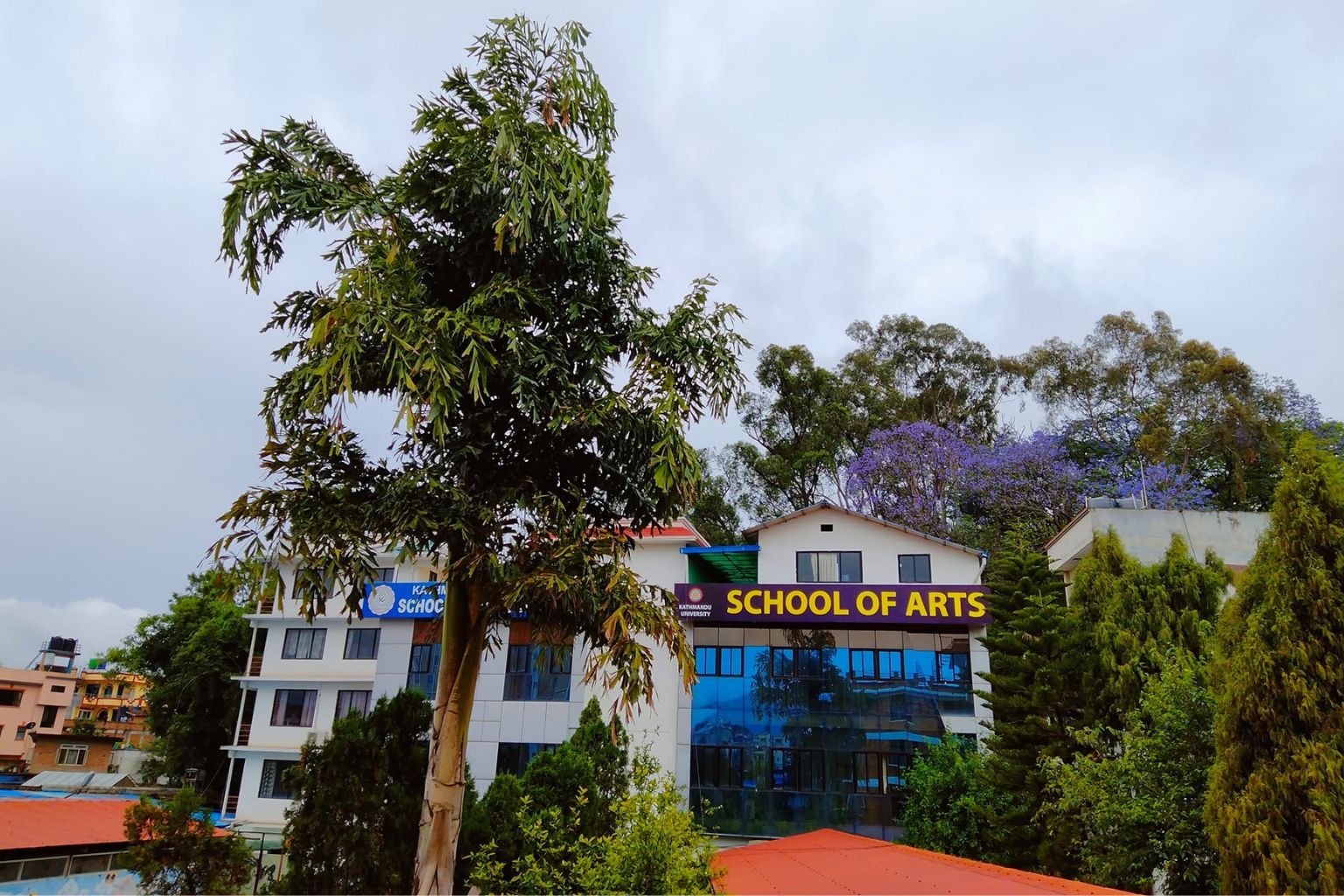
Masters in Media Studies (MMS) at Kathmandu University School of Arts (KUSOA) is a two-year, four-semester graduate program carrying 60 credit hours. The course combines media and communication theory with research, analytical work, media production, professional practice, internship, and dissertation.
The first year establishes the theoretical and research base, while the second year allows students to work with electives and complete advanced research, a media production or media project, internship, and dissertation. The program operates under the academic rules and regulations of Kathmandu University (KU).
| Particular | Details |
|---|---|
| Course | Masters in Media Studies (MMS) |
| Institution | Kathmandu University School of Arts (KUSOA) |
| University | Kathmandu University |
| Location | Hattiban, Lalitpur, Nepal |
| Level | Master's |
| Duration: | 2 years |
| Academic structure | 4 semesters |
| Total credits | 60 credit hours |
| Seats: | 30 |
| Study areas | Media theory, research, analysis, production and communication |
| Final semester | Advanced research, media project/production, internship and dissertation |
MMS brings together the academic study of media and communication with practical production and research. Students study communication theories, media literacy, social sciences, globalization, technology and culture, media management, policy, law, ethics, and research methods before moving into specialized electives and independent academic work.
The course gives substantial attention to research. Research Methodology I and II are included during the first year, while Advanced Media Research and a six-credit dissertation appear in the final semester. Research-oriented assignments also form part of the broader academic structure.
Practical work is built into the program through elective practicum courses, media production or media project work, and internship. This means the course is not limited to classroom discussion of communication theories. Students also work with media practices and research applications relevant to their chosen areas.
The academic aims of MMS include developing students' ability to:
Understand major principles and theories in media and communication.
Apply analytical approaches to media issues.
Work with media production in an area of specialization.
Conduct research in media, communication, and related social-science areas.
Design communication strategies and promotional communication campaigns.
Prepare for responsibilities in media organizations and related professional settings.
Build an academic base for research-oriented higher study.
The program combines individual study with group activities and places research, communication competence, production work, and critical analysis within the same graduate curriculum.
Each semester carries 15 credits, producing a total of 60 credits over four semesters.
| Semester | Main Courses | Credits |
|---|---|---|
| First Year, Semester I | Communication and Media Theories; Media Literacy; Social Sciences for Media; Media and Globalization; Research Methodology I | 15 |
| First Year, Semester II | Communication Traditions in Nepal and Asia; Media, Identity and Diversity; Media, Technology and Culture; Global Media and International Communication; Research Methodology II | 15 |
| Second Year, Semester I | Media Management; Media Policy, Law and Ethics; Elective I; Elective II; Elective III | 15 |
| Second Year, Semester II | Advanced Media Research; Media Production/Media Project; Internship; Dissertation | 15 |
The first year consists of compulsory courses and develops a common academic foundation in media theory, communication, research, society, technology, globalization, identity, and diversity.
The third semester introduces specialization through three electives alongside Media Management and Media Policy, Law and Ethics. The final semester concentrates on advanced research and independent work through the media project or production, internship, and dissertation.
The elective structure allows students to work across different media and communication interests. Available subjects include journalism, broadcasting, film, promotional communication, development communication, media analysis, media systems, convergence, advertising, radio management, political communication, public relations, gender, visual culture, and other specialized areas.
Elective I options include:
Advanced Journalism I
Broadcast Journalism
Film Studies
Promotional Communication
Media and Development
Advanced Media Analysis Techniques
Media System in Nepal
Mobile Journalism (Practicum)
Elective II includes subjects such as Media Convergence and Content Management, Radio Station Management, Advertising Management, Development Communication in the Digital Era, Philosophy and Communication, Nepali Society, Culture and Communication, Advanced Journalism II (Practicum), and Screenwriting (Practicum).
Elective III includes Media Activism, New Media and Social Change, Media Entrepreneurship, Media and Political Communication, Media and International Affairs, Media and Gender, Public Relations Principles and Strategies, Alternative Media Practices, Advanced Television Broadcasting, Advanced Media Writing, Performance Techniques, and Photography and Visual Culture.
MMS uses a combination of academic and practice-oriented learning methods. These include:
Classroom lectures
Focused readings
Presentations and discussions
Laboratory and field practicum
Case-study analysis
Visits and observations
Seminars
Research assignments
Internship
Media production and project work
Students are expected to participate actively in both individual and group learning. The structure gives room for theoretical study, critical discussion, research practice, and media production rather than concentrating on one type of academic work.
A three-credit course requires 48 contact hours.
Eligibility: Applicants for Masters in Media Studies must have completed at least a three-year bachelor's degree. The current KUSOA admission criteria require a cumulative grade point average of 2.5 out of 4.0 or an equivalent 50 percent in the latest degree.
Candidates with at least 10 years of professional experience in an associated field may qualify with a minimum CGPA of 2.0 out of 4.0 or 45 percent.
Admission also requires an acceptable result or ranking in the entrance examination. The entrance examination assesses language proficiency and analytical ability. The MMS selection process includes a written examination, followed by an interview for candidates who qualify through the written stage.
Admission, entrance procedures, curriculum requirements, examinations, results, and degree awards operate under Kathmandu University rules and regulations.
Assessment consists of both in-semester and end-semester evaluation for regular courses.
In-semester evaluation: 50 percent
End-semester evaluation: 50 percent
Practicum courses: in-semester evaluation only
End-semester examinations follow Kathmandu University's examination procedures. The form of internal assessment can depend on the nature of the course, particularly where research, practical work, production, or project activity is involved.
Students who successfully complete all 60 credit hours according to Kathmandu University requirements are awarded the Masters in Media Studies degree.
The course also includes an academic exit provision after the first year. A student who completes 30 credit hours covering the first two semesters may receive the Postgraduate Diploma In Media Studies under the stated program structure.
Through its combination of compulsory courses, electives, research, production, internship, and dissertation, the program supports development in areas such as:
Media and communication analysis
Academic and applied media research
Quantitative and qualitative research approaches
Media production
Communication planning
Media writing and presentation
Media policy and ethical analysis
Independent research and dissertation writing
Collaborative project work
The exact mix of practical skills depends in part on the electives and production areas selected by the student.
MMS graduates may consider work in media organizations and media-support sectors where communication, research, production, planning, or management skills are relevant.
Possible areas include:
Journalism and editorial work
Radio and television
Media production
Research agencies
Advertising
Public relations
Media planning
Communication strategy
Social media management
Content management
Media monitoring
Media consultancy
Governmental and non-governmental communication work
Independent media-related work
Roles identified within the program's career scope include managing editor, radio station manager, television producer, scenarist, media consultant, media planner, communication strategist, social media manager, content manager, arts administrator, media monitor, and researcher.
The program also provides an academic base for further research and higher study in media, communication, liberal arts, and social sciences. Career outcomes depend on individual skills, experience, specialization, performance, and available opportunities.
The course may suit graduates who want structured postgraduate study in media and communication with substantial attention to theory, research, and professional practice.
It is particularly relevant to students interested in combining academic work with one or more areas such as journalism, communication research, media management, production, digital media, development communication, advertising, public relations, film, broadcasting, or media policy.
Because the curriculum includes research methodology, advanced research, internship, production or project work, and dissertation, students should also be prepared for sustained reading, analytical writing, research assignments, and independent academic work.
The Masters in Media Studies is a two-year program divided into four semesters.
Students must complete 60 credit hours for the Masters in Media Studies degree.
Applicants must have completed at least a three-year bachelor's degree with a minimum CGPA of 2.5 out of 4.0 or an equivalent 50 percent. A separate provision applies to candidates with at least 10 years of professional experience in an associated field.
Yes. Admission requires an acceptable result or ranking in an entrance examination that assesses language proficiency and analytical abilities. The selection process also includes an interview after the written stage.
The first year covers Communication and Media Theories, Media Literacy, Social Sciences for Media, Media and Globalization, Research Methodology, Communication Traditions in Nepal and Asia, Media, Identity and Diversity, Media, Technology and Culture, and Global Media and International Communication.
Yes. Internship is a three-credit component of the fourth semester alongside Advanced Media Research, Media Production/Media Project, and Dissertation.
Yes. MEDS 542 Dissertation carries six credits and is completed during the second year, second semester.
Yes. Under the stated program structure, a student completing 30 credit hours during the first two semesters may receive the Postgraduate Diploma In Media Studies.
Graduates may consider journalism, broadcasting, media production, research, advertising, public relations, communication strategy, media planning, social media, content management, media monitoring, consultancy, and communication-related roles in governmental and non-governmental organizations.