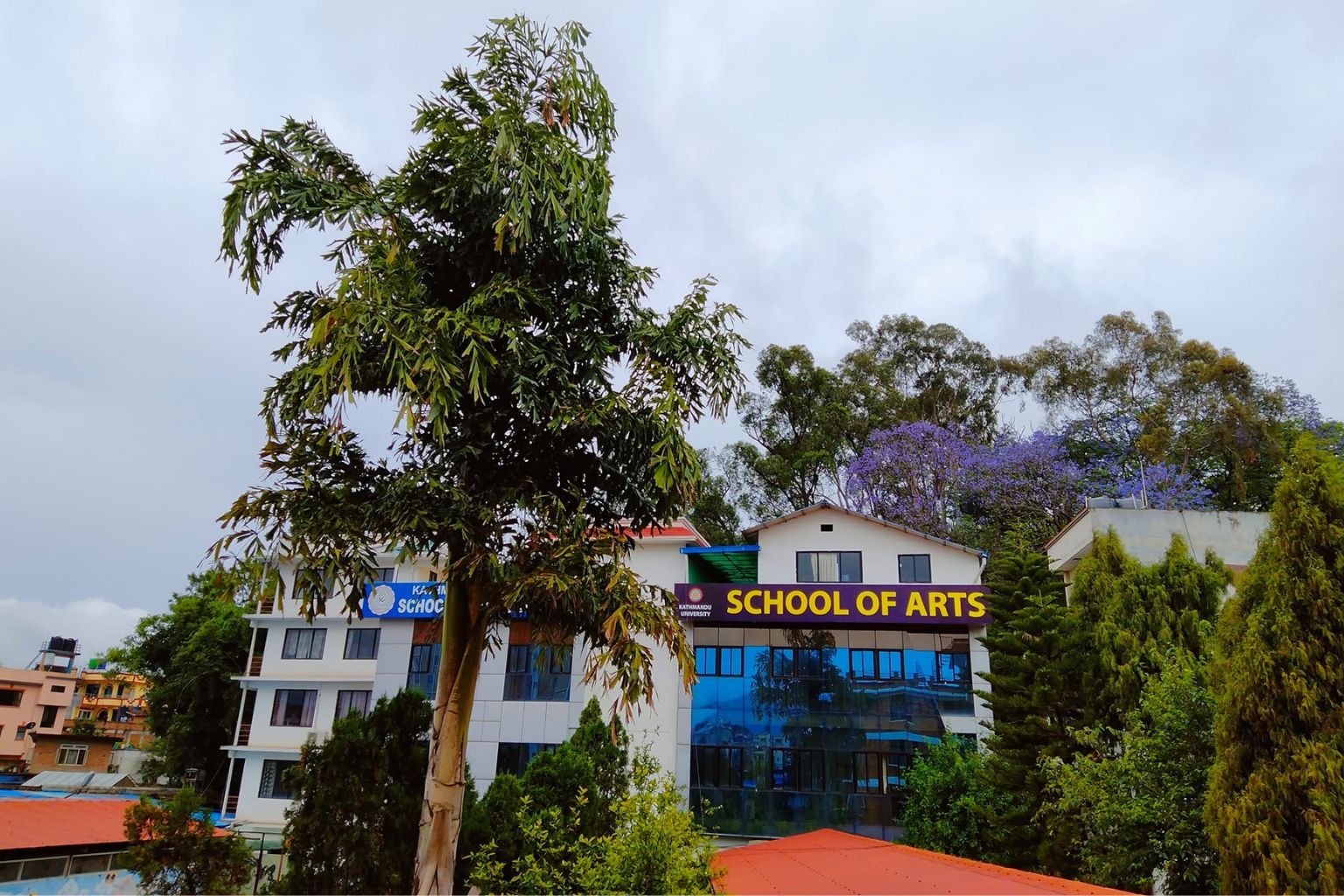
Bachelor of Arts in English, and Mass Communication and Journalism (BA-EMCJ) is a four-year, eight-semester undergraduate program offered by the Department of Languages and Mass Communication at Kathmandu University School of Arts (KUSOA), Hattiban, Lalitpur.
The 120-credit curriculum combines English, literature, journalism, mass communication, professional writing, research, digital media, and interdisciplinary study. Students move from foundational language and journalism courses into literary criticism, media law, film studies, public relations, translation studies, advanced journalism, internship, and project work.
KUSOA is a constituent academic unit of Kathmandu University (KU), and the program follows KU academic rules and regulations.
| Particular | Details |
|---|---|
| Course | Bachelor of Arts in English, and Mass Communication & Journalism (BA-EMCJ) |
| Level | Bachelor's |
| Institution | Kathmandu University School of Arts |
| Department | Department of Languages and Mass Communication |
| University | Kathmandu University |
| Location: | Hattiban, Lalitpur, Nepal |
| Duration: | 4 years |
| Academic structure | 8 semesters |
| Total credits | 120 |
| Seats: | 20 |
| Eligibility: | 10+2 or equivalent in any discipline |
| Admission requirement | Kathmandu University Entrance Examination |
| Final-year components | Internship and Project Work |
The program has 20 allotted seats and requires 120 credits for graduation.
BA-EMCJ combines two substantial areas of undergraduate study: English and Mass Communication and Journalism. Its curriculum does not separate them into unrelated tracks. Students work with literature, language, writing, cultural study, journalism, media, research, and communication throughout the degree.
English-related study ranges from poetry, fiction, drama, literary criticism, linguistics, translation, and South Asian literature to academic writing, creative non-fiction, and contemporary themes in literature. The media side begins with journalism and mass communication before moving into photojournalism, broadcasting and digital media, film studies, media ethics and law, public relations, advertising, marketing, and advanced journalism.
The program also draws on philosophy, psychology, Nepal Studies, research methodology, and other interdisciplinary subjects. This mix gives students a degree structure that connects textual analysis and writing with the study and practice of communication.
The eight-semester curriculum carries 15 credits in each semester, reaching 120 credits over four years.
| Semester | Main Courses | Credits |
|---|---|---|
| Semester I | English I; Nepali I; Poetry; Basic Journalism I; Introduction to Mass Communication and Journalism | 15 |
| Semester II | English II; Nepali II; Nepal Studies; Introduction to Linguistics and Phonetics; Basic Journalism II | 15 |
| Semester III | Philosophy; Professional Writing; Psychology; British and American Fiction; Photojournalism | 15 |
| Semester IV | Drama; Nepali Writings in English; Critical Thinking; Research Methodology; Broadcasting and Digital Media | 15 |
| Semester V | Literary Criticism; Ethnographic and Life Writings; Rhetoric and Composition; Film Studies; Media Ethics and Law | 15 |
| Semester VI | Eco Writings and Criticism; South Asian Literature in English; Children's Literature; Academic Writing; Public Relations, Advertising and Marketing | 15 |
| Semester VII | Trends in English Literature; Translation Studies; Indigenous/Ethnic Creations; Internship; Diaspora, Migration, and Cosmopolitanism | 15 |
| Semester VIII | Creative Non-fiction; Ageing, Gender, and Sexuality; Project Work; Advanced Journalism Practices | 15 |
The final semester includes six-credit Project Work, making it the largest single course component in the curriculum.
The English component develops progressively across the four years.
Students begin with English and Poetry, followed by Introduction to Linguistics and Phonetics. The second year adds Professional Writing, British and American Fiction, Drama, Nepali Writings in English, and Critical Thinking.
By the third year, the curriculum moves further into literary and academic study through:
Literary Criticism
Ethnographic and Life Writings
Rhetoric and Composition
Eco Writings and Criticism
South Asian Literature in English
Children's Literature
Academic Writing
Fourth-year study includes Trends in English Literature, Translation Studies, Indigenous/Ethnic Creations, Diaspora, Migration, and Cosmopolitanism, Creative Non-fiction, and Ageing, Gender, and Sexuality.
This progression connects literary study with professional, academic, critical, and creative forms of writing.
Journalism begins in the first semester and continues across the degree.
Basic Journalism I and II establish an early foundation, while Introduction to Mass Communication and Journalism gives students a broader communication context. Later courses bring in Photojournalism, Broadcasting and Digital Media, Film Studies, Media Ethics and Law, Public Relations, Advertising and Marketing, and Advanced Journalism Practices.
The curriculum therefore covers both media analysis and applied communication areas. Students encounter questions of media practice, ethics, law, visual journalism, broadcasting, digital communication, public relations, advertising, and journalism at different stages of the course.
BA-EMCJ includes Research Methodology in the fourth semester and Project Work in the final semester.
Research sits alongside interdisciplinary courses such as Philosophy, Psychology, and Nepal Studies. Literary courses also extend into cultural and social themes through ethnographic and life writing, eco criticism, indigenous and ethnic creations, migration, gender, sexuality, and ageing.
This structure gives students several ways to work with texts, media, society, communication, and research rather than limiting the degree to language proficiency or newsroom practice alone.
Internship appears in the seventh semester as ENGS 404 and carries three credits.
The final semester includes ENGS 453 Project Work, carrying six credits.
These components place independent and practice-oriented work near the end of the degree after students have completed courses in literature, writing, journalism, communication, research, media ethics, broadcasting, film, and public relations.
The internship and project are formal curriculum components rather than optional activities.
Eligibility: Applicants must have completed high school (10+2) or an equivalent qualification in any discipline.
The BA-EMCJ admission criteria do not restrict applicants to a particular high-school stream.
Applicants should be prepared for a curriculum that requires sustained reading, writing, literary study, journalism, communication, research, and project work throughout four years.
All candidates seeking admission to BA-EMCJ are required to take an Entrance Examination as required by Kathmandu University.
Admission, entrance procedures, curriculum implementation, examinations, results, academic progression, and degree award operate according to Kathmandu University rules and regulations.
The program is administered academically through the Department of Languages and Mass Communication at KUSOA.
Department Email: dolmc@ku.edu.np
Department Phone: 9801370644
Admissions Email: soa_admission@ku.edu.np
Admissions Phone: 9801298094
Scholarships are identified for needy and meritorious students within the BA-EMCJ course information.
KUSOA students also study within Kathmandu University's wider scholarship and student-support framework. Scholarship awards and continuation remain subject to the applicable university arrangements.
The subjects taught across the program can support development in areas such as:
Academic and professional writing
Journalistic writing and reporting
Literary reading and criticism
Critical thinking
Research
Photojournalism
Broadcasting and digital-media study
Public relations
Advertising and marketing communication
Translation
Academic writing
Creative non-fiction
Media ethics and legal awareness
Project-based academic work
The extent of these abilities depends on coursework, individual performance, internship experience, and project work.
The BA-EMCJ academic scope relates to several fields involving English, writing, journalism, communication, media, and research.
Graduates may consider areas such as:
Teaching of English language, literature, communication studies, or journalism
Print and online publishing
Journalism
Research
Corporate communication
Media research
Web content development
Social media management
Public relations
Advertising
Freelance writing and editing
Copywriting and proofreading
Script writing
Media management
Arts management
Development-sector communication and administration
Policy development and advocacy
Cultural and archival work
The program also provides an academic foundation for further study in literature, social sciences, journalism, and related fields.
Career direction depends on the graduate's skills, academic performance, experience, further study, and available opportunities.
BA-EMCJ may suit students who want one undergraduate degree that keeps English and communication studies in active contact throughout the curriculum.
It may be relevant to students interested in a combination of:
Literature and cultural study
Writing
Journalism
Media and communication
Research
Digital and broadcast media
Public relations
Translation
Academic and creative writing
Students should also consider the four-year commitment and the mix of reading, written assignments, media-related study, internship, and final project work when deciding whether the program matches their academic interests.
BA-EMCJ is the Bachelor of Arts in English, and Mass Communication & Journalism offered by the Department of Languages and Mass Communication at Kathmandu University School of Arts.
The program takes four years and is divided into eight semesters.
Students complete 120 credits across the eight-semester curriculum.
The program has 20 allotted seats.
Applicants must have completed high school (10+2) or an equivalent qualification in any discipline.
Yes. All candidates seeking admission are required to take an Entrance Examination as required by Kathmandu University.
The curriculum includes English, literature, linguistics, journalism, mass communication, professional and academic writing, research methodology, photojournalism, broadcasting and digital media, film studies, media ethics and law, public relations, advertising, translation studies, and advanced journalism.
Yes. Internship is a three-credit course in the seventh semester.
Yes. Project Work is a six-credit course in the eighth semester.
Scholarships are identified for needy and meritorious students under the program's student-support provisions.
Graduates may consider journalism, teaching, publishing, research, public relations, advertising, corporate communication, content development, social media, writing and editing, media management, and related communication fields.