Kathmandu University School of Education (KUSOED) is the School of Education of Kathmandu University, located in Hattiban, Lalitpur, Nepal. Established in 1997, KUSOED began its educational work through in-service teacher training and related programs for schools in Dhulikhel Municipality. Its first academic programs started in 1998 with MPhil and PhD programs in Educational Leadership.
The School now works across teacher education, educational leadership, language education, STEAM education, development studies, inclusive and special needs education, early childhood development, school counselling and wellbeing, technical and vocational education, and professional learning. Its academic portfolio ranges from bachelor and postgraduate diploma programs to master’s, MPhil, and PhD study. Postgraduate programs use blended and multimodal learning arrangements, while undergraduate education includes face-to-face and internship-based learning.
| Field | Details |
|---|---|
| Institution | Kathmandu University School of Education |
| Acronym | KUSOED |
| Institution type | School of Education within Kathmandu University |
| Established | 1997 |
| Location | Hattiban, Lalitpur, Nepal |
| University | Kathmandu University |
| Academic levels | Bachelor, certificate/bridge, diploma, postgraduate diploma, master’s, MPhil, and PhD |
| Main academic areas | Education, leadership, language education, STEAM, development, counselling, early childhood, inclusion, TVET, and professional education |
| Postgraduate learning | Blended and multimodal learning |
| Undergraduate learning | Face-to-face and internship-based learning |
| Phone | +977-1-5912524, +977-1-5914105 |
| admin@kusoed.edu.np | |
| Website | https://soed.ku.edu.np |
KUSOED is an academic school within Kathmandu University (KU). Its academic work centers on education, educational research, professional preparation, and fields connected with schools, higher education, development, counselling, technical education, training, and educational leadership.
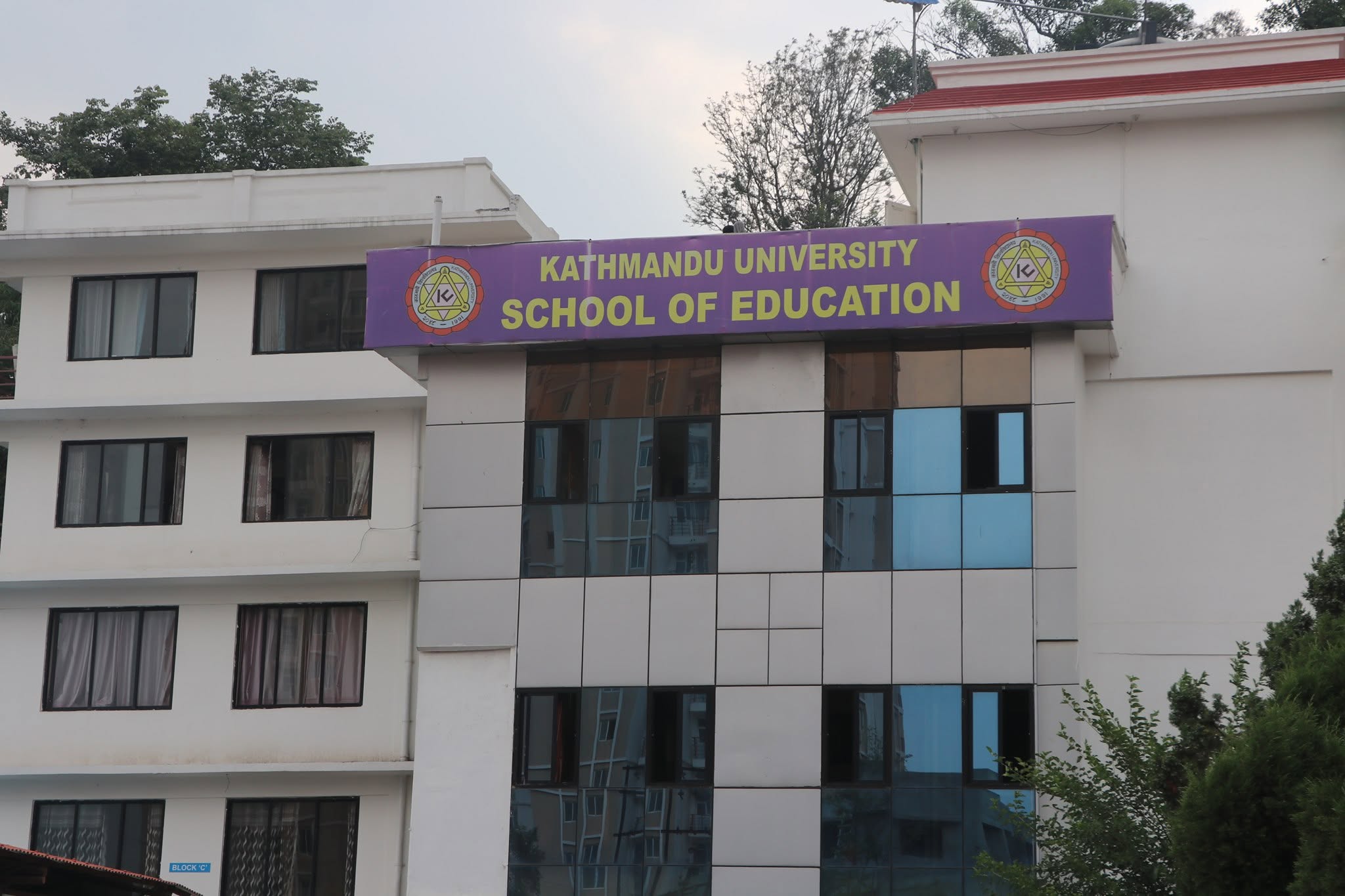
The School has developed beyond a single teacher-training pathway. Students can enter at different academic levels and pursue programs in distinct fields. These include undergraduate teacher education, language-focused degrees, technical education, postgraduate diplomas, one-year and two-year master’s pathways, research degrees, and doctoral study.
The academic areas represented across KUSOED include educational leadership, STEAM education, development education, language education, inclusive education, early childhood development, school counselling and psychological wellbeing, sustainable development, technical and vocational education and training, writing and literacy studies, indigenous education, higher education, and professional development.
Each program has its own academic purpose. A technical education degree differs from a language-teaching degree, while a postgraduate diploma serves a different purpose from a bridge course or research degree. Similarly, one-year and two-year master’s programs with related titles should be considered separately when examining eligibility, academic structure, admission requirements, and seat provisions.
Kathmandu University School of Education was established in 1997. Its early educational work was connected with schools and community-based teacher development rather than beginning only through university degree programs.
The School’s first activity focused on improving education in schools within Dhulikhel Municipality, mainly through in-service teacher training and related programs. This placed teacher development, educational practice, and engagement with schools within KUSOED’s work from its beginning.
Academic programs followed in 1998 with MPhil and PhD programs in Educational Leadership. Educational leadership became one of the School’s long-standing academic areas and later expanded to include master’s and postgraduate-level study.
Mathematics and STEAM education developed through another sequence of academic expansion. MEd in Mathematics Education began in 2006. In 2019, the Mathematics Education unit was extended into the Department of STEAM Education, widening academic work into mathematics, science, technology, and multidisciplinary STEAM education.
A further institutional development occurred in November 2024 when the Department of Inclusive Education, Early Childhood Development and Professional Studies received approval from Kathmandu University’s Academic Council and Executive Council. The department developed from the expansion of activities associated with continuing and professional education.
| Year | Institutional development |
|---|---|
| 1997 | Kathmandu University School of Education established |
| 1998 | MPhil and PhD programs in Educational Leadership initiated |
| 2006 | MEd in Mathematics Education introduced |
| 2019 | Mathematics Education unit extended into the Department of STEAM Education |
| November 2024 | Department of Inclusive Education, Early Childhood Development and Professional Studies approved |
KUSOED’s academic development has remained connected with education-related fields. Teacher preparation, leadership, development, research, language, counselling, STEAM, inclusion, early childhood development, and professional education form the main areas within this institutional growth.
KUSOED uses the vision “Transforming society through educational excellence.” Its academic direction connects this vision with the preparation of education professionals, leaders, researchers, and development practitioners.
The School’s mission focuses on preparing competent and multidisciplinary education professionals and leaders through knowledge creation and academic services. Its approach also gives attention to professionals working within schools, communities, educational institutions, development settings, and other professional environments.
KUSOED identifies the following institutional values:
Respect
Integrity
Courage
Humanity
Local wisdom
Creativity
Collaboration
Innovation
Work culture
Sustainability
Quality
The School also identifies graduate attributes that extend beyond completion of an academic qualification. These include:
Lifelong learning
Respect for diversity among humans and other sentient beings
Compassionate, caring, and ethical conduct
Responsibility and commitment to making a difference
Critical and creative citizenship
Intellectual rigor
These attributes connect with an academic approach that includes experiential, reflective, critical, and participatory forms of learning. Research, professional engagement, reflection, and application within educational and social settings also form part of the School’s postgraduate academic environment.
KUSOED organizes its academic programs across several departments and specialized areas. The named academic units indicate the principal fields through which teaching, research, and professional education are carried out.
The Department of Development Education connects education with development-related study and professional practice. Its academic areas include sustainable development, technical and vocational education and training, indigenous education and development, and advanced research in development studies.
Programs connected with the department include postgraduate, master’s, MPhil, and PhD study. The academic focus brings development issues into an educational setting through subjects related to sustainability, work and occupation, indigenous knowledge, development practice, and technical and vocational education.
The Department of Educational Leadership was established in 1998 and is one of KUSOED’s earlier academic units. Its work covers educational leadership, management, institutional development, research, and educational planning.
Programs associated with this department include MEd in Leadership and Management in one-year and two-year formats, MPhil in Educational Leadership, and PhD study in Educational Leadership.
The department also works with areas such as strategic planning, program and project design, educational management, evaluation, institutional development, training, research, and engagement with school leaders.
The Department of STEAM Education developed from KUSOED’s earlier work in Mathematics Education. Its academic areas include mathematics education, science education, technology education, and multidisciplinary STEAM education.
The department provides programs across different academic levels, including bachelor, bridge, postgraduate, master’s, MPhil, and PhD study. It also conducts teacher professional development activities related to curriculum, pedagogy, assessment, mathematics, technology, and STEAM education.
The development of the department reflects KUSOED’s expansion from Mathematics Education into wider interdisciplinary education involving science, technology, engineering, arts, and mathematics.
Language Education covers undergraduate, postgraduate diploma, master’s, MPhil, and doctoral programs.
Academic areas include English Studies, TESOL, English Language Teaching, English Language Education, writing and literacy, Chinese language teaching, and education in national and indigenous languages.
Postgraduate diploma pathways also include language-teaching programs in Maithili, Yakthung, Nepalbhasha, and Tamang.
The Department of Inclusive Education, Early Childhood Development and Professional Studies brings together academic areas related to inclusion, special needs education, early childhood development, and professional learning.
Its academic scope includes diploma and postgraduate diploma education, early childhood development, inclusive and special needs education, training and development, and advanced study related to early childhood and adult learning.
The department received approval in November 2024 following the expansion of activities connected with continuing and professional education.
School counselling and wellbeing forms another defined academic area at KUSOED. The School offers master’s-level study in school counselling as well as doctoral study related to School Counseling and Wellbeing.
The institutional structure also includes a School Counseling and Wellbeing Unit and a School Counseling and Wellbeing Support Centre.
KUSOED has centers and units connected with professional education, research, writing, communication, counselling, and wellbeing.
These include:
Continuing and Professional Education Centre (CPEC)
Writing and Communication Center (WCC)
Research and Innovation Center (RIC)
School Counseling and Wellbeing Support Centre (SCWSC)
School Counseling and Wellbeing Unit
These entities operate alongside the academic departments and contribute to professional education, research, communication, counselling, and other academic activities within the School.
KUSOED offers academic pathways across bachelor, certificate or bridge, diploma, postgraduate diploma, master’s, MPhil, and PhD levels. Program areas include language education, leadership, development, STEAM, inclusion, counselling, early childhood development, technical education, sustainable development, writing and literacy, indigenous education, higher education, and professional education.
The undergraduate portfolio covers language education, technical education, mathematics education, and basic and early education.
Programs include:
Bachelor of Technical Education in Information Technology and BIT (B Tech Ed IT)
Bachelor in Mathematics Education
Bachelor of Technical Education in Civil Engineering
Bachelor of Education in Basic and Early Education (B.Ed. BEE)
The language-related programs combine language study with teacher education. Technical education programs focus on education within technical subject areas, while Mathematics Education and Basic and Early Education provide separate academic routes.
Students comparing these programs should read the complete degree title carefully because each undergraduate option has a different disciplinary and professional focus.
KUSOED offers several diploma, postgraduate diploma, and bridge pathways. These qualifications should be considered separately because their academic purposes differ.
Programs include:
Post-Graduate Diploma in Education in Yakthung Language Teaching
Post-Graduate Diploma in Education in Maithili Language Teaching
Post-Graduate Diploma in Education – Technical Vocational Instruction (PGDE-TVI)
PGDE in Nepalbhasha Teaching
PGDE in Tamang Language Teaching
PGDE in Early Childhood Education
PGDE in Primary Education
Bridge Course in Early Childhood Education
A bridge course is distinct from a postgraduate diploma. The Bridge Course for MEd in Mathematics Education, for example, is specifically connected with progression toward MEd study, while diploma and postgraduate diploma programs have their own qualification structures and entry conditions.
Master’s study forms a substantial part of the KUSOED academic portfolio. The School has one-year and two-year options in selected areas, along with Master of Education degrees and other master’s qualifications.
These programs are connected with the Educational Leadership area and continue KUSOED’s long-standing academic work in educational leadership and management.
These qualifications provide separate pathways in English language teaching and the broader study of writing and literacy.
Mathematics Education has been part of KUSOED since 2006 and later became connected with the wider Department of STEAM Education. The academic portfolio includes separate STEAM-related master’s pathways as well as Higher Education.
Master in School Transformation
The School provides separate academic pathways in counselling, early childhood development, inclusive education, and school transformation. Where one-year and two-year formats exist, applicants need to distinguish the exact program title before reviewing academic requirements.
These programs connect education with sustainable development, technical and vocational education, indigenous knowledge and development, training, and professional learning.
Master of Philosophy programs provide advanced research study across several of KUSOED’s academic areas.
Programs include:
MPhil in Early Childhood Education
The MPhil portfolio covers academic areas that also appear at master’s and doctoral levels, including leadership, language education, development studies, STEAM education, and early childhood education.
KUSOED offers doctoral study across education, leadership, development, language, STEAM, early childhood, adult learning, and counselling.
Programs include:
These doctoral programs correspond with academic fields represented across KUSOED’s departments and specialized units.
Seat numbers are specified for selected KUSOED programs.
| Program | Seats |
|---|---|
| MEd in Leadership and Management | 25 |
| MEd in English Language Teaching | 25 |
| MEd in Mathematics Education | 25 |
| Master in Technical and Vocational Education and Training | 25 |
| MEd in Leadership and Management – One Year | 20 |
| MPhil in English Language Education | 25 |
| M Ed in STEAM Education – One Year | 30 |
| MEd in English Language Teaching – One Year | 25 |
| Master in Training and Development | 25 |
| MEd in Early Child Development | 25 |
| Bachelor of Technical Education in Information Technology and BIT | 30 |
| Master in Writing and Literacy Studies | 25 |
Seat figures differ by program and apply only to the programs for which a seat number is specified.
KUSOED operates within Kathmandu University, and its admission processes follow the rules and regulations of Kathmandu University.
Admission requirements are program-specific because the School offers qualifications at several academic levels. Bachelor, postgraduate diploma, master’s, MPhil, and PhD applicants therefore follow requirements connected with the particular program for which they apply.
Entrance and selection procedures are also determined within the applicable Kathmandu University and KUSOED academic framework for each program.
Applicants should use the exact program title when considering admission. This is particularly relevant where one-year and two-year versions of a related master’s program are available or where the same subject area appears across postgraduate diploma, master’s, MPhil, and PhD levels.
Eligibility is governed by Kathmandu University rules and the academic requirements attached to the relevant KUSOED program.
The School’s programs cover different academic levels and disciplinary areas, so one eligibility standard cannot be applied to the entire institution. Entry conditions for an undergraduate degree differ from those for a postgraduate diploma, master’s program, MPhil, or PhD.
Applicants therefore need to consider eligibility in relation to the exact program they intend to study.
Curriculum and program structure are governed under Kathmandu University’s academic system.
The breadth of the KUSOED portfolio means curriculum varies substantially between academic fields. Language education, leadership, STEAM education, development studies, counselling, early childhood development, inclusive education, technical and vocational education, and professional education each follow subject-specific academic structures.
Some KUSOED programs are offered in one-year formats, while others follow two-year or longer academic structures. Bridge courses, postgraduate diplomas, master’s programs, MPhil programs, and doctoral degrees also serve different academic purposes.
For this reason, curriculum should be understood at individual program level rather than as a single School-wide course structure.
Examinations, assessment, results, academic completion requirements, and degree awards are governed by Kathmandu University rules and regulations.
Students must complete the academic requirements attached to their respective programs. The applicable requirements differ according to the level, subject, and structure of the qualification.
The degree or other academic qualification is awarded under Kathmandu University after completion of the prescribed requirements for the relevant program.
KUSOED uses different learning arrangements for undergraduate and postgraduate education.
Postgraduate programs use blended or multimodal pedagogy combining online and face-to-face academic engagement. This approach allows postgraduate learning to include more than one mode of instruction and interaction.
Undergraduate programs use face-to-face learning with internship-based components. The internship element connects academic study with practical experience relevant to the program.
KUSOED’s broader educational approach also gives attention to experiential, reflective, critical, and participatory pedagogy. Research, professional engagement, reflection, and application within educational settings form part of the School’s academic environment.
These learning approaches are applied across fields such as educational leadership, sustainable development, technical and vocational education, STEAM education, language education, school counselling, early childhood development, and inclusion.
Research has been part of KUSOED’s academic identity since its early years. The first academic programs introduced in 1998 were MPhil and PhD programs in Educational Leadership.
The School now offers advanced research study across several fields, supported by faculty and student research activities. The Research and Innovation Center forms part of the institutional structure.
Research areas represented within KUSOED include:
Educational leadership and management
Development and sustainable development
Technical and vocational education
Mathematics and STEAM education
Language education
Early childhood development
Inclusive and special needs education
School counselling and wellbeing
Adult learning
Indigenous education
Higher education
Teacher and professional education
The School’s academic approach connects research with educational practice, professional settings, and social contexts. Advanced programs provide opportunities for focused research within specific areas of education and development.
Community and professional engagement have been part of KUSOED’s work since its establishment. Its first educational activity involved in-service teacher training and related programs for schools in Dhulikhel Municipality.
This connection with schools and professional practice continues through programs designed for teachers, educational leaders, teacher educators, counsellors, development professionals, technical educators, trainers, and others working in education-related settings.
The Department of STEAM Education conducts teacher professional development activities related to curriculum, pedagogy, assessment, mathematics, technology, and STEAM education.
The Department of Educational Leadership also works with school leaders through academic discussion, training, research, and publication.
KUSOED’s academic work further includes collaboration with universities, research organizations, educational communities, and other institutions.
The KUSOED program portfolio is easier to understand when separated by academic level.
At bachelor level, students can study areas such as English and TESOL, Chinese language teaching, technical education, mathematics education, and basic and early education.
Diploma and postgraduate diploma programs provide specialized study in areas such as educational management, language teaching, inclusive and special needs education, early childhood education, primary education, technical-vocational instruction, mathematics education, and STEAM education.
Bridge courses serve a different academic purpose and are connected with progression toward further study in particular fields.
Master’s programs cover leadership and management, English language teaching, mathematics education, STEAM education, school counselling, early childhood development, inclusive education, higher education, sustainable development, technical and vocational education and training, writing and literacy, indigenous education, training and development, and school transformation.
MPhil and PhD programs represent the advanced research levels of the School. Academic areas at these levels include leadership, development, language education, STEAM, early childhood education, adult learning, school counselling and wellbeing, and wider education research.
This structure helps students distinguish between professional coursework, bridge study, postgraduate specialization, master’s education, and research degrees before considering the requirements of a particular program.
Kathmandu University School of Education is located in Hattiban, Lalitpur, Nepal.
| Contact field | Details |
|---|---|
| Location: | Hattiban, Lalitpur, Nepal |
| Phone: | +977-1-5912524, +977-1-5914105 |
| Email: | admin@kusoed.edu.np |
| Website: | https://soed.ku.edu.np |
The Hattiban campus serves as the School’s base for academic programs, departments, research activities, professional education, and administration.
Kathmandu University School of Education, commonly known as KUSOED, is the School of Education of Kathmandu University. It offers education and related programs from bachelor and postgraduate diploma levels through master’s, MPhil, and PhD study.
KUSOED was established in 1997. Its early activities included in-service teacher training and educational programs for schools in Dhulikhel Municipality. Its first academic programs began in 1998 with MPhil and PhD study in Educational Leadership.
KUSOED is located in Hattiban, Lalitpur, Nepal.
KUSOED is the School of Education of Kathmandu University and functions within the university’s academic structure.
KUSOED offers bachelor, certificate or bridge, diploma, postgraduate diploma, master’s, MPhil, and PhD programs.
Academic areas include Development Education, Educational Leadership, Language Education, STEAM Education, Inclusive Education, Early Childhood Development, Professional Studies, School Counselling and Wellbeing, Technical and Vocational Education and Training, Sustainable Development, Indigenous Education, Writing and Literacy, and Higher Education.
Yes. Selected academic areas include one-year and two-year master’s pathways. These include Leadership and Management, STEAM Education, and School Counseling. English Language Teaching also includes a one-year master’s program.
Admission, entrance, selection, and related academic procedures follow Kathmandu University rules and the requirements of the relevant KUSOED program.
Eligibility depends on the academic level and the specific program. The applicable conditions follow Kathmandu University rules and the requirements attached to the relevant program.
Curriculum, examinations, assessment, results, completion requirements, and degree awards operate under Kathmandu University’s academic rules and regulations.
Postgraduate programs use blended or multimodal learning that combines online and face-to-face academic engagement. Undergraduate education includes face-to-face and internship-based learning.
Yes. KUSOED offers MPhil and PhD programs in several academic areas, including leadership, development studies, language education, STEAM education, early childhood education, adult learning, education, and school counselling and wellbeing.